“Walking the stacks in a library, dragging your fingers across the spines –- it’s hard not to feel the presence of sleeping spirits.” –Robin Sloan, “Mr. Penumbra’s 24-Hour Bookstore”
-
-
Another victory for Runner 5
Well, the zombies didn’t get me.
This time.
Yesterday, I participated in the Zombies, Run! Virtual Race. What’s a virtual race? It’s basically an event where thousands of people worldwide engage in a run/walk at the same time while listening to a story about, well, the zombie apocalypse.
During my 5K, I walked (and walked and walked) on the treadmill in my living room in New Hampshire while simultaneously infiltrating the mysterious Xia-Hifa Biologics headquarters in England. My goal? To break into a vault, obtain some medicine and escape back to my settlement before the zombies — or something worse? — stopped me.
As you can see below, I sweated and survived.
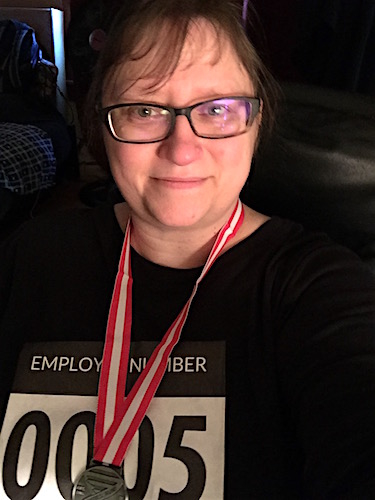
Success! 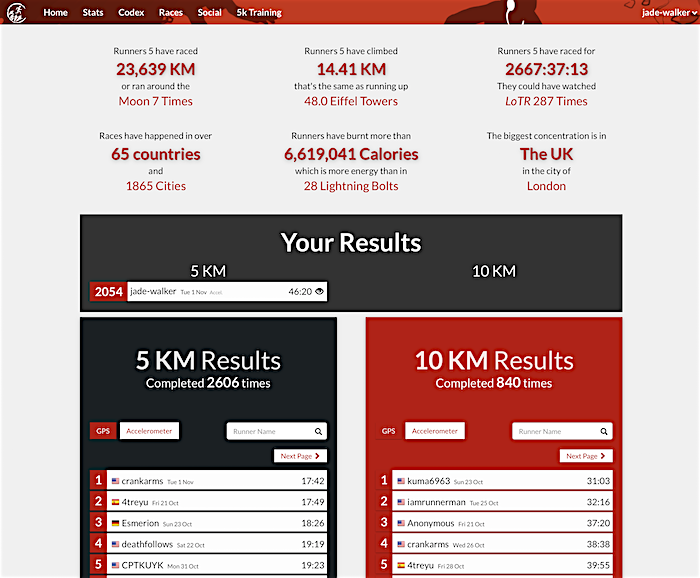
-
What do you wanna know?
I frequently use social media to ask questions of my friends and readers. Their answers give me insights and inspiration as well as sate my curiosity about the world. Last week, I offered myself up for an “Ask Me Anything” session. Here are the fun queries I received:
WHAT MOVIES HAVE ROCKED YOUR WORLD LATELY?
“Sully,” “I’ll See You In My Dreams,” “Money Monster” and “Age of Adeline.”
DID YOU ORDER THE CODE RED?
If you’ve seen the movie “A Few Good Men,” you know the only answer to this one is: “You’re goddamn right I did!”
FAVORITE PLACE YOU’VE LIVED SO FAR AND WHERE DO YOU WANT TO LIVE?
Top place I’ve lived? New York City. As for where I want to live… ultimately, I’d like to live in Scotland. I’d also like to reside in Canada, London and New Zealand. At the moment, we’re trying to move to the Manchester/Nashua area.
WHAT’S SOMETHING MOST PEOPLE DON’T KNOW ABOUT YOU?
I really enjoy receiving mail.
WHAT DO YOU WANT FOR YOUR BIRTHDAY?
Kittens. A winning lottery ticket. An accepted bid and quick closing. Anything on my wish list.
WHAT’S YOUR NEXT QUERY?
What are you going to be for Halloween?
WHAT ARE YOU GOING TO BE FOR HALLOWEEN?
Due to our current circumstances, I’m not dressing up this year.
DO YOU CRY EASILY?
I never used to. Now I cry at the drop of a hat.
WOULD YOU RATHER BE HATED OR FORGOTTEN?
Forgotten.
WHO WILL YOU VOTE FOR?
I vote for leaving the country and becoming an expat.
WHAT’S THE BEST ADVICE YOU’VE RECEIVED LATELY?
Over the summer, M and I saw Judd Hirsch star in the play “The Stone Witch.” His character, an aging children’s book writer and illustrator, urged his young protege to always “value your work.” At that exact moment, I needed to hear it, too.
-
What is your Starbucks name?
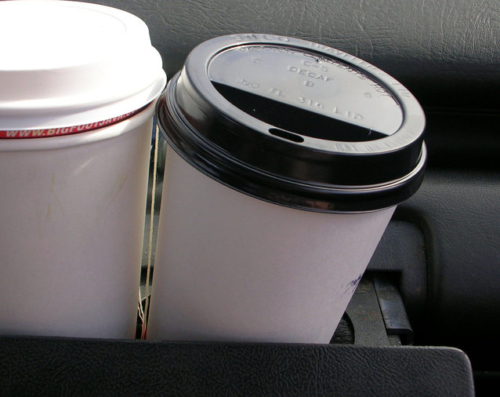
Mine is “Walker.” If I try using my first name, the cashier/barista will always write “Jane” on the side of the cup.
Still, I do wonder… Who is this mysterious Jane? Is she smart, beautiful, adventurous, kind? Is she a night owl? A cat lover? A reader? Does she make her friends laugh? Is she in love? And, most importantly, why does she want my grande hot cocoa?
–Photo by Mel Guknes
-
Stocking up for the zombie apocalypse
Due to the fact that I work the graveyard shift, running errands can be a bit difficult. To get around this problem, I generally only go to the grocery store once or twice a month.
We have a decent-sized fridge for storing fresh foods and a separate freezer for when we buy in bulk. I also keep a stocked larder because you never know when you’re going to need to eat from what you already have in the house.
Prior to leaving for the store, I sit down with my menu cards, cookbooks and recipe programs to plot out all our future meals. Next, I open the Clear app on my phone and create a list of ingredients. If I’m cooking at night and I notice that we’re getting low on a particular item, I’ll also add it to the shopping list. Lastly, I rearrange the list into aisle order, from produce to meat, from pantry items to dairy/frozen goods. This may sound like a ridiculous step, but I’ve found that building the list in this fashion keeps me from forgetting an item or having to backtrack.
Once at the store, I lock my purse and cloth bags to the shopping cart and don a set of headphones. The other end of the cord is plugged into my phone and tuned to a second app: Zombies, Run! You’d be amazed at how quickly you can knock out a month’s worth of grocery shopping when the undead are chasing you.
I’m sure I look quite silly during this process, particularly when I react aloud to the story’s twists and turns, or start mouthing the words to the songs, but who cares? I’m doing my chores and getting much-needed steps — all while being entertained.
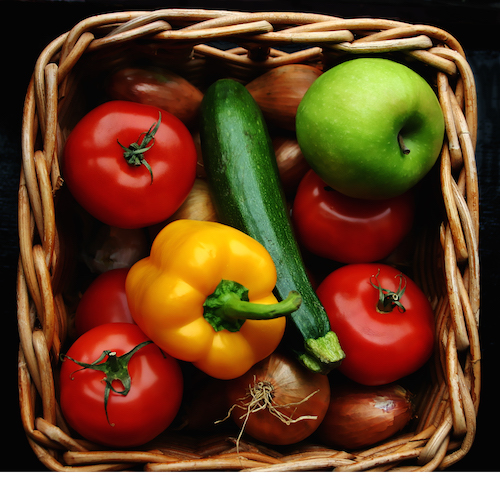
What do I buy? Here’s a typical shopping list:
Bananas
Pears
Apples
Plums and/or peaches
Oranges
Lemons and/or limes
Grapes
Pineapple
Berries
Romaine lettuce
Peppers
Broccoli
Potatoes
Onions
Garlic
Shallots
Celery
Carrots
Asparagus
Baby bok choiPepperoni
Black forest ham
Hard salami
Ground beef
Chicken thighs
Chicken breast
Whole chicken
Pork chops
Bacon
Pork tenderloin
Skirt or ribeye steak
Some sort of seafoodWhole wheat hamburger buns
Chicken broth
Northern beans
Black beans
Pinto beans
Basmati rice
Arborio rice
Gnocchi
Spaghetti
Fettuccine
Angel hair
Shells, mac or lasagne
Evaporated milk
Sugar
Brown sugar
Flour
Bread flour
Tuna
Flour tortillas
Chipotle peppers w/adobo sauce
Crushed tomatoes
Panko
Soy sauce
Corn chips
Popcorn
CashewsHeavy cream
Mozzarella
Cheddar
Pepperjack
Butter
Milk
Frozen fruit and veg
Ice cream and/or chocolateWith these items in stock, I can create a tasty mixture of meals full of fresh and shelf-stable items. Plus, I generally manage to buy everything for about $300, which is pretty decent considering I make from-scratch meals for breakfast, lunch, dinner and dessert.
So, what does your grocery list look like? And do zombies chase you, too?