“Books are quiet and interior experiences in a very loud world.” –John Green
-
-
Getting to know all about you
Steve Glassman, one of my oldest friends, spent last month blogging like a maniac as part of Nano Poblano. I followed his posts, and even after knowing him for more than three decades, managed to learn some new things.
Since Steve opted to be so candid, I felt it only fair to reply in kind. These are my responses to the questions he answered here:
What’s the #1 most played song on your playlist?
I checked the play counts in my iTunes app and found “Virtuoso” by Black Violin was at the top of the list. The other most-played app-toppers:
“Uncharted: The Eldorado Megamix” by DJ Shadow
“(The Forgotten People)” by Thievery Corporation
“Fresh Blood” by Eels
“Ain’t No Rest For The Wicked” by Cage the ElephantAre these my favorite songs? No, though I do love ’em. But they are the songs I listen to in the middle of the night, during a long drive, while working out or when I just need an extra boost of “Jade” energy.
Apple has also created a “smart playlist” of the songs I listen to most often. Other than the ones listed above, my top five were:
“Do I Wanna Know?” by Arctic Monkeys
“Calm the Storm” by Graffiti 6
“Come Over Here” by Sam Bettens
“Escape Artist” by Zoe Keating
“Dead Souls” by Nine Inch NailsWhat is one of your favorite quotes?
“Just once in a while let us exalt the importance of ideas and information.” –Edward R. Murrow
Alas, we live in an age where millions proudly disdain seekers of knowledge and worship “reality tv” personalities.
What sound do you love?
I love eavesdropping on the conversations of trees.
-
The day 2020 became too much for me
In late September, I was, like many of you, feeling rather stressed. Between the election, the pandemic, the hurricanes, the wildfires, etc., I was sleeping very little. And when I did sleep, my dreams were filled with nightmare scenarios of actual events or of possible future ones.
On this one Friday, I made three terrible errors: I skipped dinner, stayed up late and then allowed myself to sleep in. This meant that when I finally reemerged from Morpheus’ realm, I was hungry, thirsty and achy from bed. After Marcus and I took a hot shower to get out the kinks in my muscles, we planned to dress then go downstairs for a spot of tea and a bite to eat. At the very end of the shower, though, I felt myself growing dizzy. I got out, wrapped myself in a towel and closed my eyes to keep the room from spinning. The next thing I knew, I was on the floor in a pool of blood.
Sometime between closing my eyes and Marcus toweling himself dry, I had fainted and fallen face-first on hard tile.
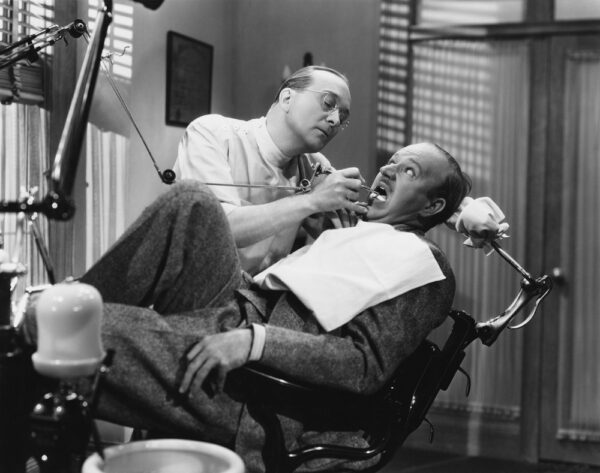
When I came to, I discovered that I had made a complete mess of my face: two black eyes, a swollen nose, a bruised mouth, a split lip and a chipped tooth. Several of my front teeth were also loose. Which meant, as much as I wanted to avoid it, a trip to the dentist was in order.
Once I was able to get downstairs, I also learned that Ruth Bader Ginsburg had just died. As you can imagine, that prompted even more tears.
I’ve been avoiding the dentist for much of 2020. I was only scheduled for annual checkups and deep cleanings, however, the pandemic meant those appointments had to be canceled. First, the state’s lockdown closed the dentist offices to all but emergencies. When the lockdown lifted, I continued to delay my visits because I didn’t want to risk catching the coronavirus. As I’ve mentioned before, I’m in the high-risk category, which means if I contract COVID-19, I’m likely dead. Getting my teeth cleaned just didn’t seem worth the risk.
Now, I had no choice. After allowing the swelling to go down, I ended up visiting the dentist, the periodontist and the orthodontist — all in the span of a single week. Following numerous consultations, examinations and scans, the docs discovered that I’d also fractured my jaw and would need a lot of work done to set things right.
On Thursday morning, after finishing a 10-hour shift, I began another round of visits, this time to repair the damage that was done. In the end, I had several teeth pulled, the area prepped for implants and then a full set of braces installed. The procedures — complete with numerous interactions with terrifying needles — felt like fucking torture. I was in agony. I was bleeding. And I couldn’t stop shaking throughout the hours of procedures.
I’ve spent the weekend recuperating and while I’m feeling a bit better, it will take me quite a while to adjust to the soreness and the pressure on my teeth and gums that the dental work has wrought. As anyone with braces can tell you, they’re incredibly uncomfortable, particularly when you first start wearing them. I will be doing so for the next two years, followed by several more years of nocturnal retainer usage. Since I’m unable to eat anything other than applesauce, soup and mashed potatoes, I’m already down seven pounds. Yet the very thought of trying to chew anything, no matter how delicious, fills me with dread.
Hopefully, this too will pass. The experts have even promised me that I can expect to be back to eating normally by the time Thanksgiving arrives, which is good because I’m already planning on making a full feast of turkey, mashed potatoes and gravy, corn, salad, deviled eggs, biscuits, cranberry sauce, cherries jubilee and a pumpkin pie.
In the meantime, I must continue to wait for the pain and discomfort to subside. Just don’t expect me to smile until at least 2022.
-
Home is where the safety is
I am, by nature, a cautious person. I’d much rather plan than spontaneously start a project or journey. I choose to weigh the pros and cons of an idea before jumping in willy nilly. I prefer to study my options instead of just selecting the first opportunity that comes along. Don’t get me wrong; I’m able to make decisions quickly. I just give myself some time — a moment, an hour, a day — to consider the ramifications.
Then I leap in wholeheartedly.
The work I’ve done for the past 30 years has inundated me with the facts, the rumors, the trends and the tribulations of this global pandemic. Which was why I wasn’t surprised to see New York City’s lockdown successfully flatten the curve, thus helping the health care system better manage the outbreak.
Nor was I surprised to see the novel coronavirus rear its ugly head in the very states that dismissed the dangers of the illness. Their leaders and citizens mocked those who made sacrifices for the good of society. Why? Because they falsely believed: “It’ll never happen here.”
Viruses don’t work that way.
It’s also why I was so saddened (and admittedly, angry) when I saw people crowding into bars and onto beaches or throwing parties with friends or family as if there was nothing to worry about. Despite what we may see in government and at rallies featuring angry, armed, anti-maskers and anti-vaxxers, pretending the pandemic doesn’t exist won’t make it magically disappear.
And that is why, after spending months in the house, I have no plans to return to society any time soon. Yes, I want things to return to “normal.” I’d love to browse the aisles of the library, take in a double feature at the movies, fill an entire wagon with plants and flowers at my local nursery or eat dinner at a favorite restaurant. But I also know that intermingling with crowds of people puts my life at risk. It puts my husband’s life at risk. It puts our financial future at risk.
That means until there’s a reliable and safe vaccine and/or treatment for COVID-19, I’m going to stay home. If you’re able, I hope you do so too. If, however, you’re an essential worker, please take as many precautions as you can. We all need you.
Lastly, if you must leave your home, don’t spend much time hanging out in places where essential workers do their jobs. Describing someone as essential means they are that, and society can’t afford to lose them or their skills/bravery to people who are carelessly spreading the virus.
-
I just needed one number: A bingo player’s lament
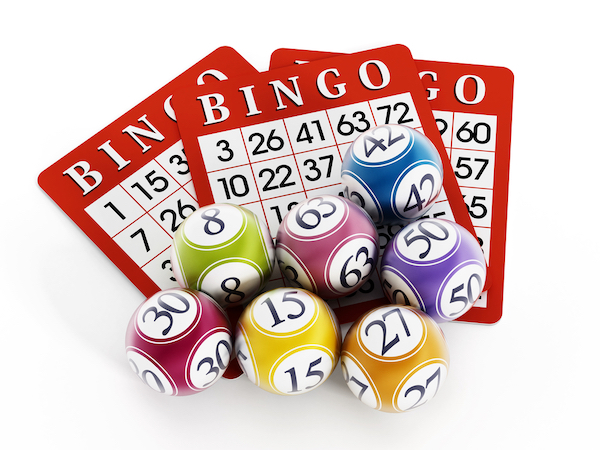
When I was a cub reporter, many many years ago, an editor assigned me a feature on bingo. I was familiar with the game, having learned it in elementary school as a way to identify numbers and letters. The women in my family would occasionally spend an evening together playing it (they even owned their own chips, which they stored in small travel cases). And, of course, I knew the song. But I had no idea what in the world I could possibly write that everyone didn’t already know. So, one Tuesday night, I headed out to the local bingo parlor.
The cavernous room held long tables, the kind used during lunch in school cafeterias. In the center of each table was a pad of bingo cards, colored daubers and a bin of small plastic chips. Most of the players were women over 50, which at the time seemed ancient to me. The air contained a cloud of smoke that slowly rose until it stuck to the ceiling and stained the paint. Yet it was the sounds inside that hall that remain in my memory to this day: the monotone call of the numbers, the eery silence that followed as a room filled with players searched their cards for matches, the delighted shout of “Bingo!” that was always followed by scattered groans, the crinkle of used paper cards and the rip of new ones leaving their pads as the players prepared for another round.
I observed several matches and wrote furiously in my reporter’s notebook. I marveled at the players who worked on up to nine cards at a time, scanning the numbers with sharp eyes and marking each correct spot. I recorded the various trinkets that players displayed on the table for good luck. And I coughed a lot as my eyes teared up from all that cigarette smoke.
When I informed the players at my table that I was writing an article about the game, they insisted that I had to play a few rounds. I admit I did hesitate at first, wanting to remain in observer mode. Then I figured, in for a penny…
Twenty dollars and two hours later, I was hooked. Even though I hadn’t won a single match, I found the process of playing — and the camaraderie formed with the other players during the game — positively invigorating. The article turned out to be just as much fun to write.
I’ve occasionally played bingo over the years: a few times with my best friend, many virtual rounds on Pogo.com, several memorable matches in Scotland on my honeymoon. And now that we’re midst of a pandemic and forced to remain at home, I’ve decided to start playing the game again. Since my friends and I are separated for safety, we’re going to conduct our bingo sessions via video. But I sense the sheer joy of playing — and yelling “Bingo!” — will overcome the distance we’re forced to observe.